The Perfect Highlight Was Out of Reach, So I Redesigned the Compromise
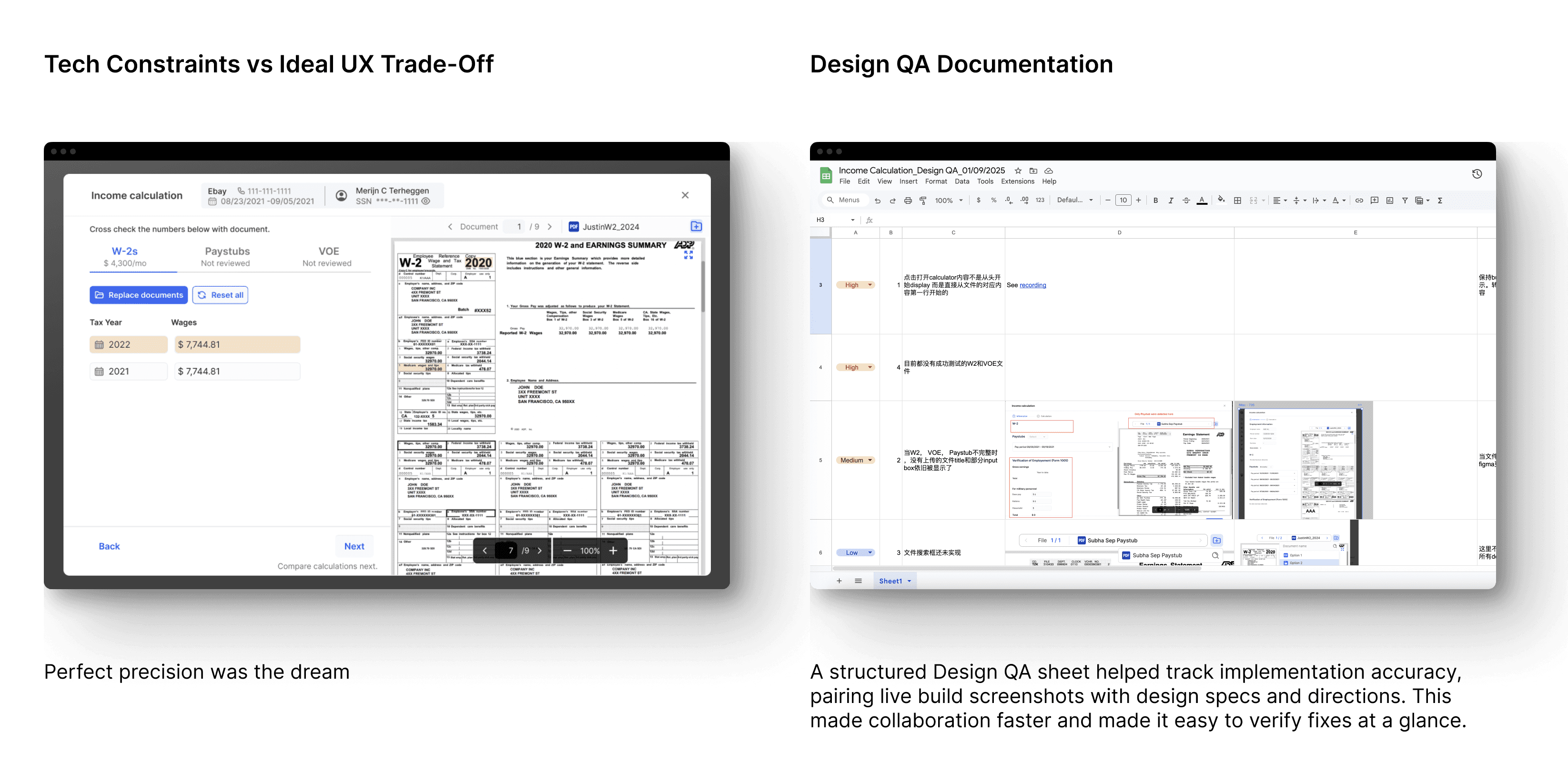
This compromise was the moment that stayed with me. Until then, I thought great design meant holding the line, fighting for the “right” solution no matter what. But here, I learned that design maturity is measured by judgment—knowing when to bend without breaking the user experience. Choosing box-to-file over box-to-box wasn’t about lowering standards; it was about saving clarity under pressure. That balance—pushing where it matters, yielding where it doesn’t—is what I carry forward.
When Complexity Became My Responsibility
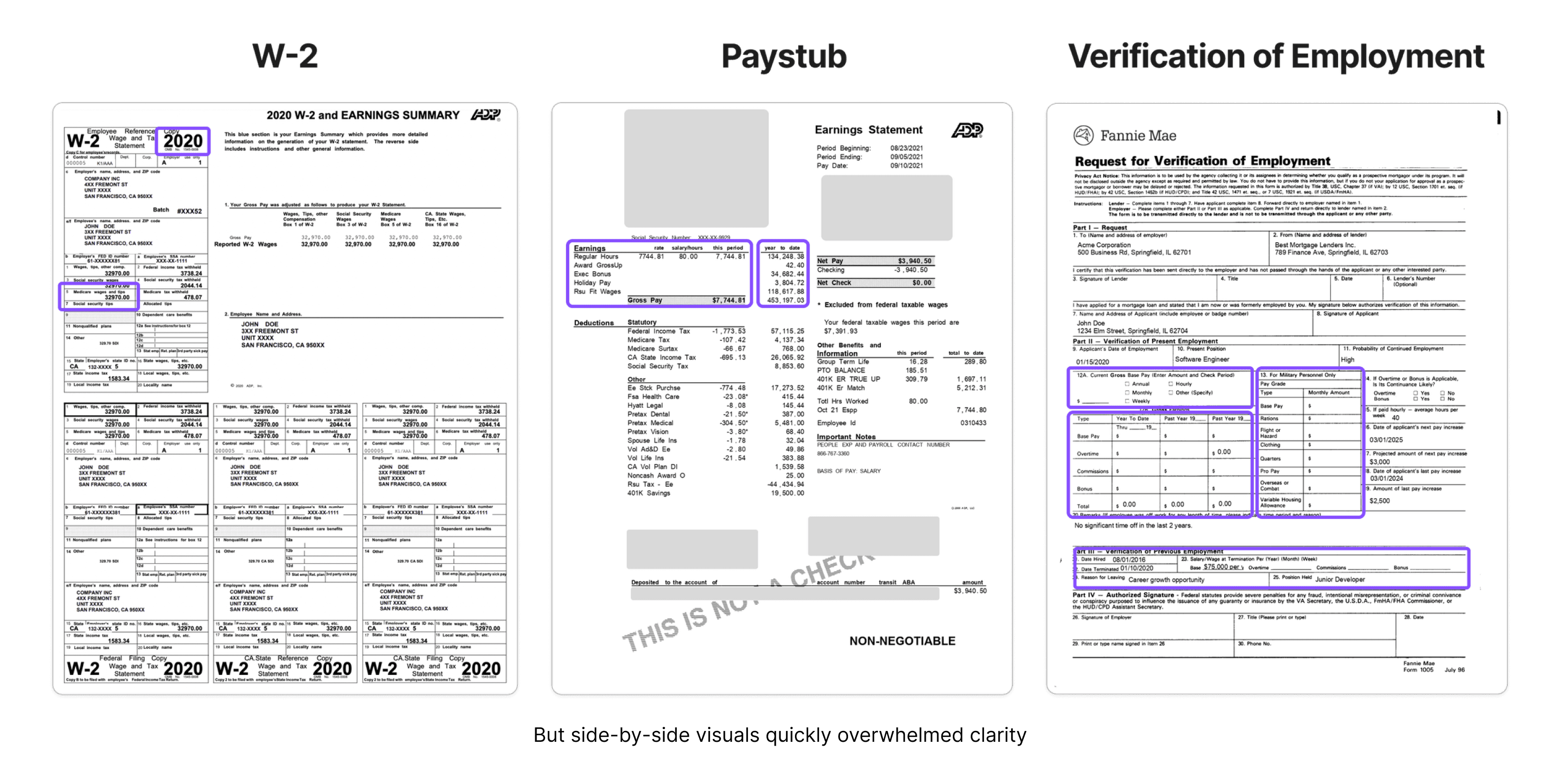
The Tool Looked Simple—Until the Visuals Made It Complex
Kickoff · PRD review · Competitive analysis · Problem framing
When I first read the PRD, my instinct was that the core function—reading numbers and doing math—wasn’t the real challenge. What worried me was how those results would be shown. A tool that forces users to jump between documents or stare at cluttered visuals would fail, no matter how correct the math. That early suspicion shaped everything that followed: my job was not only accuracy, but clarity.
Learning Payroll Logic Faster Than I Ever Expected To
Domain knowledge learning · Persona/Journey map · Empathy mapping · Insight synthesis
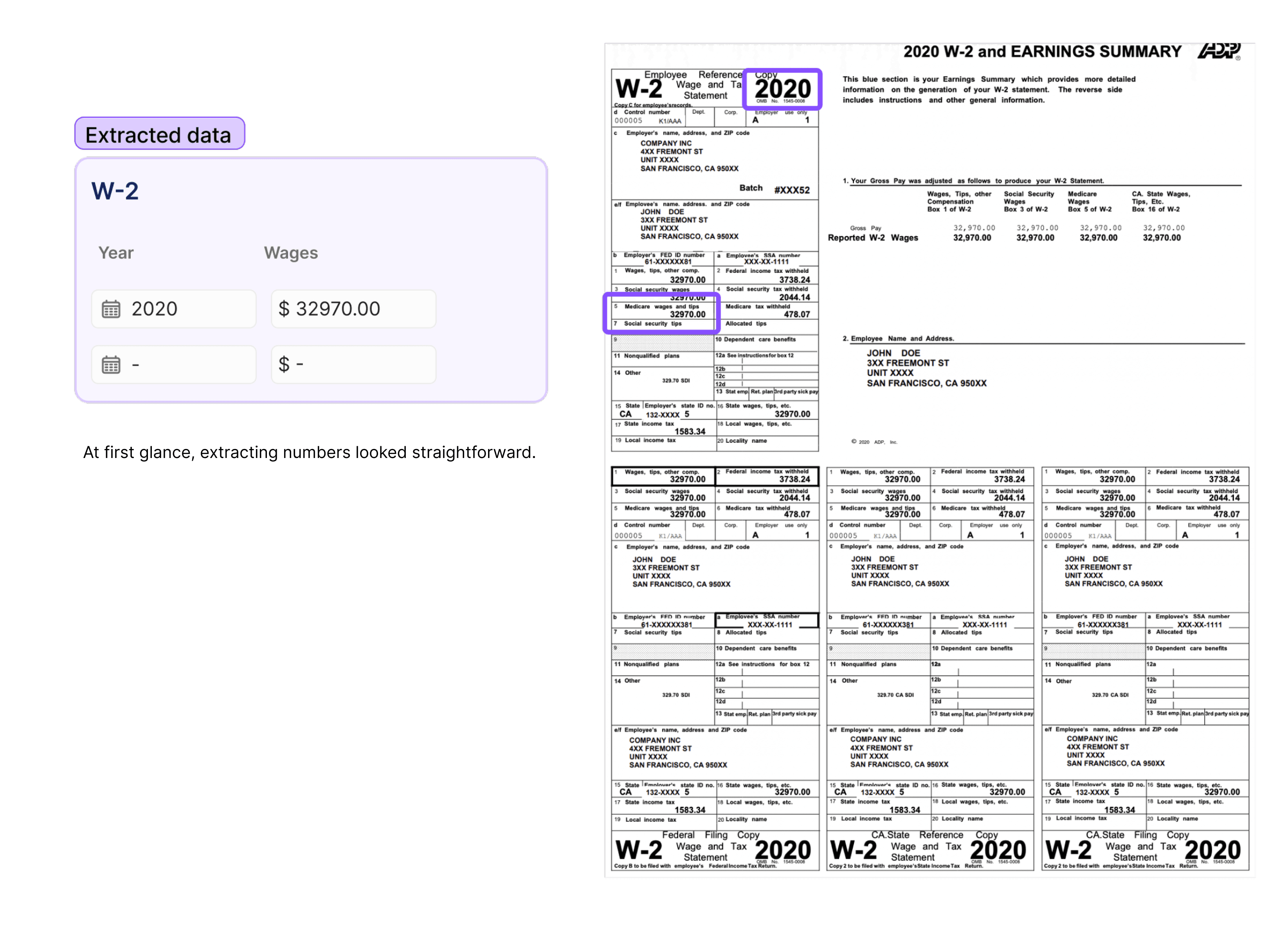
I immersed myself in loan officers’ world—decoding W-2 boxes, different paystub frequencies, and year-to-date versus regular income. At first, these felt like arcane details, but quickly I realized they weren’t trivia. They were judgment calls loan officers make every day. My value wasn’t memorizing rules; it was knowing which details matter, and how to frame them in a way software could actually respect.

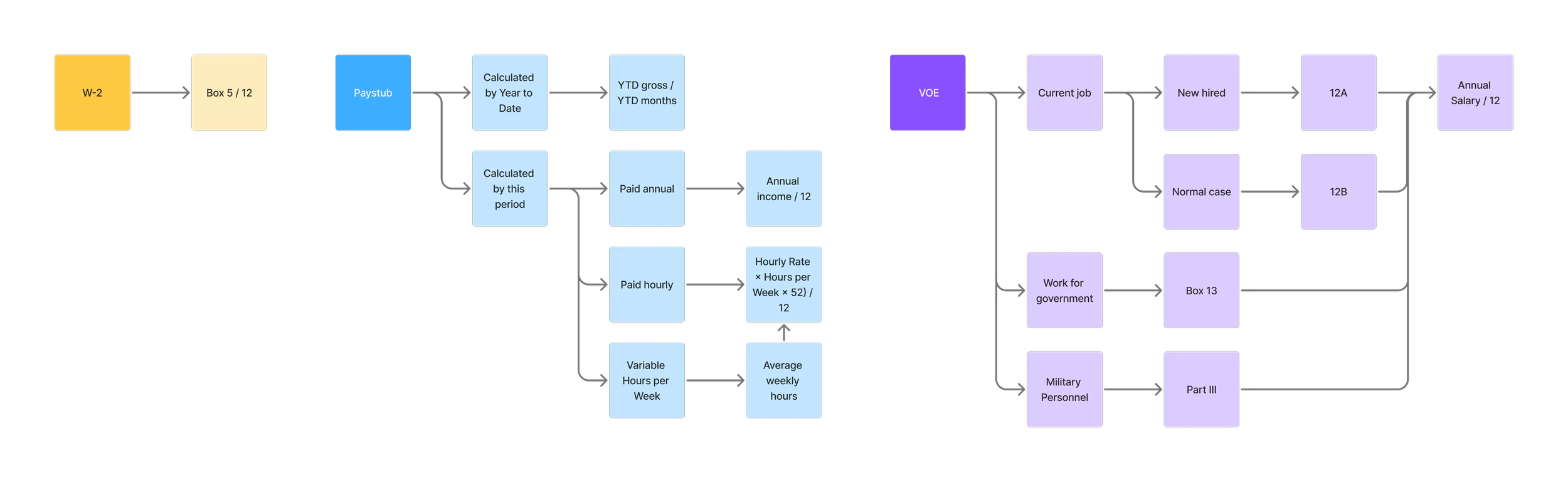
Old Tools Hid the Pain by Hiding the Comparison
User interview · Pain-point · Competitive analysis · UX audit & heuristic evaluation
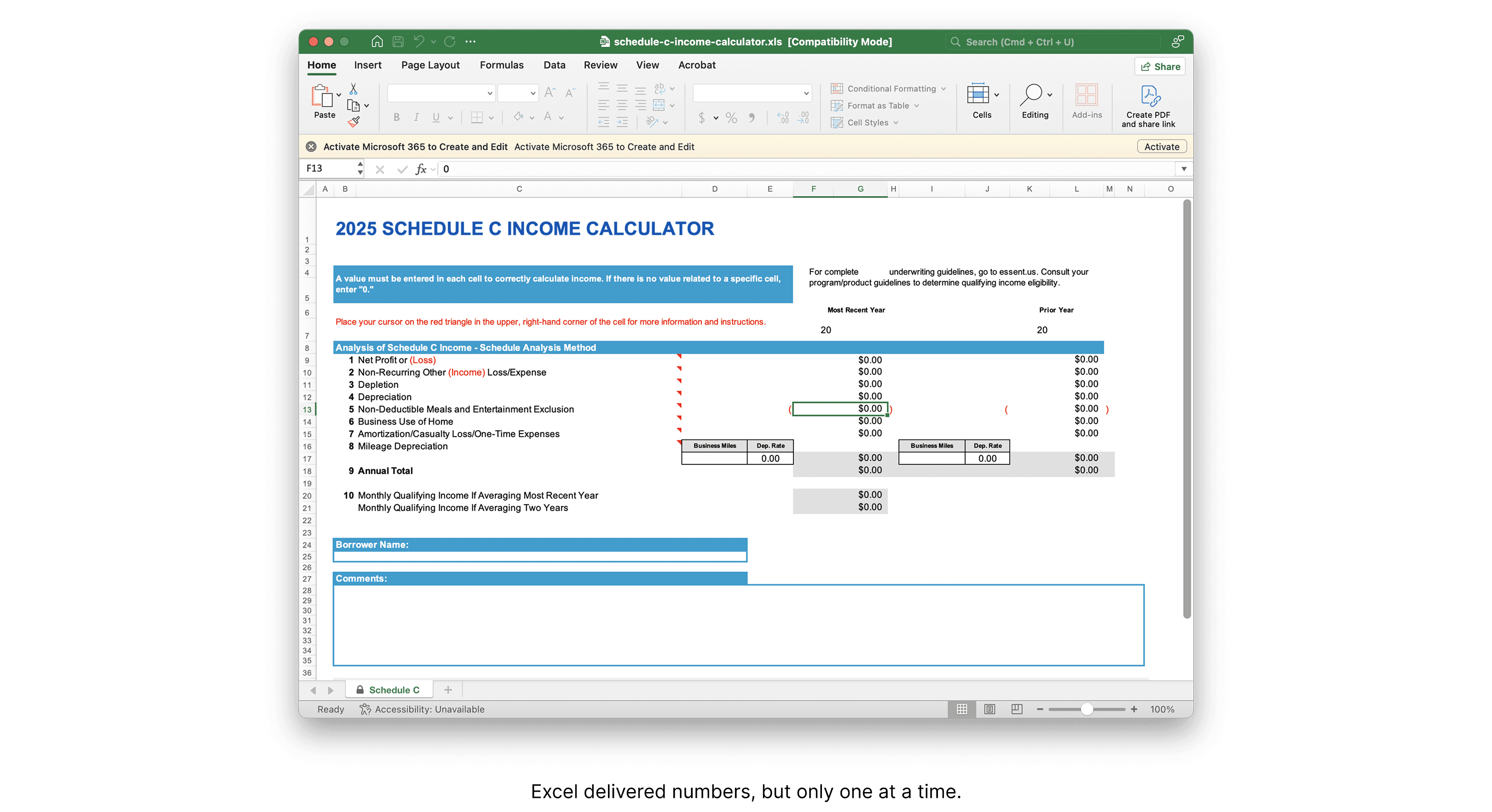
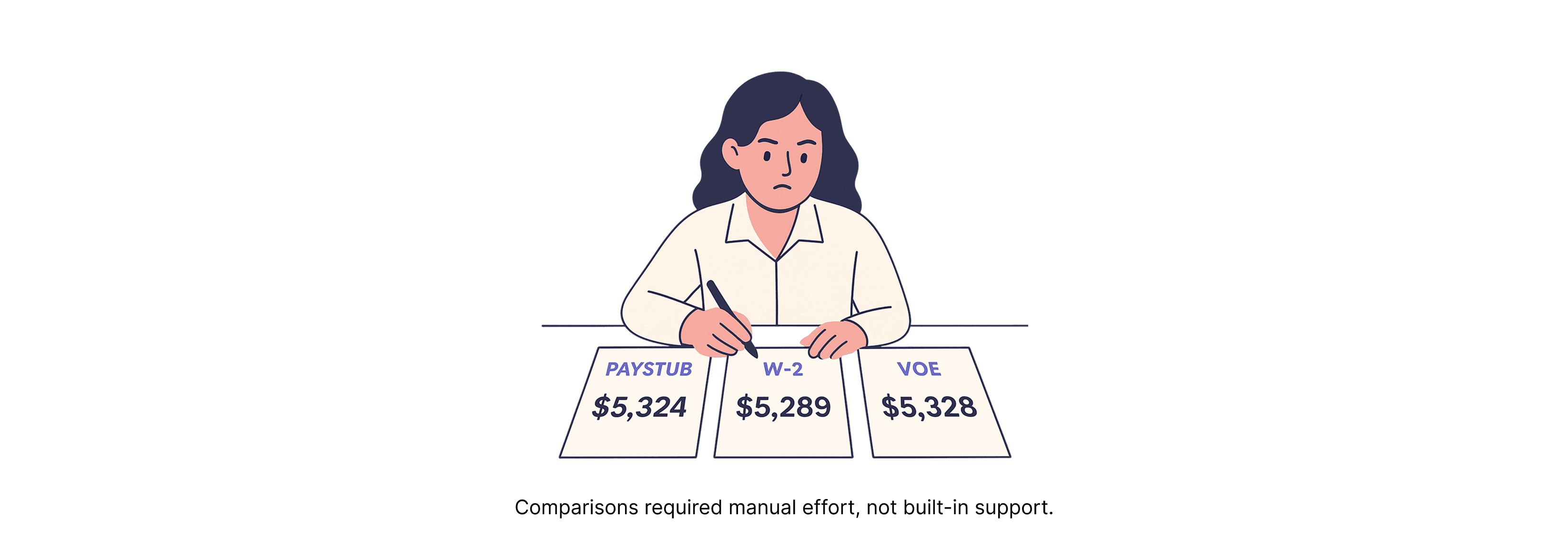
In interviews, officers admitted their Excel templates did the math, but never made results comparable. They had to copy, paste, and re-calculate just to see which number worked best. I saw how much time was wasted—not in calculation, but in switching contexts. The insight was sharp: solving comparison, not computation, would deliver the real value.
The Goal Wasn’t Just Faster Math—It Was Trust in Every Choice
Problem framing · Solution ideation · Business metrics & KPIs · Success metrics defining
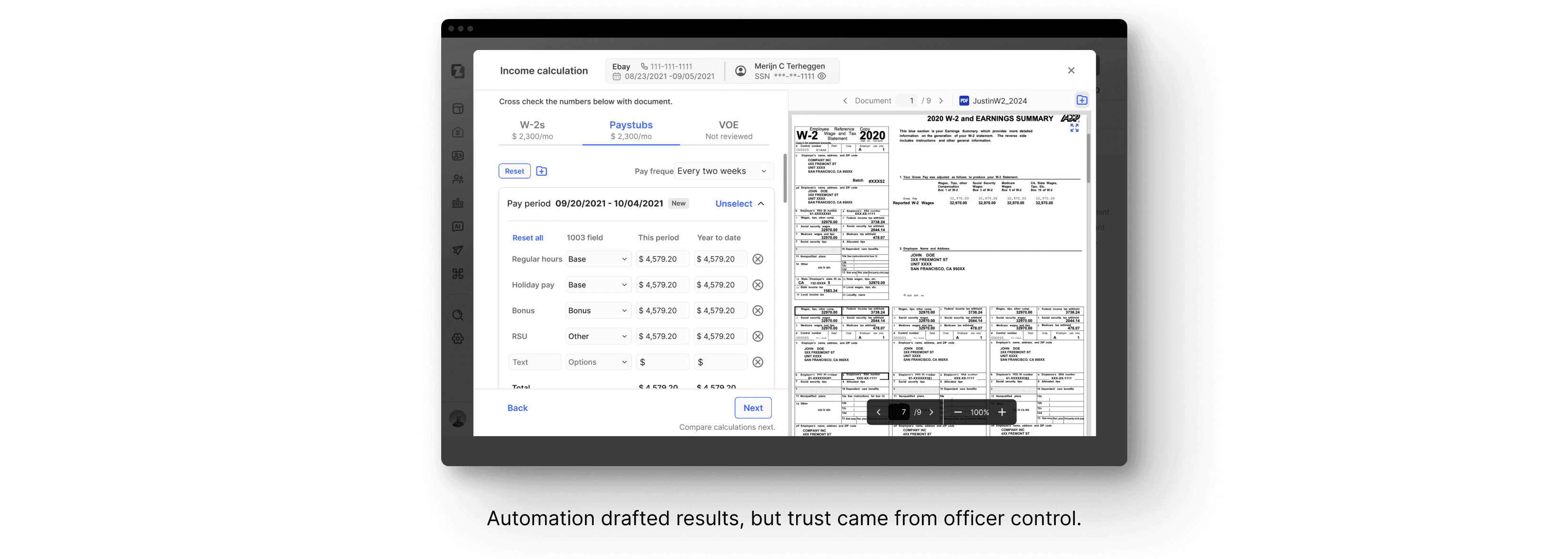
I reframed the design objective: AI would handle extraction and draft the numbers, but the loan officer would keep control. The interface needed to lay results side-by-side, so trust wasn’t asked for blindly—it was earned through clarity. That balance of automation and human choice became the north star, and the first time I felt the solution click.
Designing for Agreement, Not Just Output
Drawing Flows Was Easy—Convincing the Team Took More Work
User flow development · PM collaboration · Agile/Scrum · Cross-functional collaboration
I mapped the user flow, placing the tool as a button inside the application form. Technically, it worked. But my real challenge was alignment—PM and engineers needed to see this not as a side feature, but as part of the form’s DNA. That moment taught me that design doesn’t live in Figma; it lives in how others accept it.

When My PM and I Disagreed, a Consultant Settled It
Conflict resolution · Presentation · Consultant validation
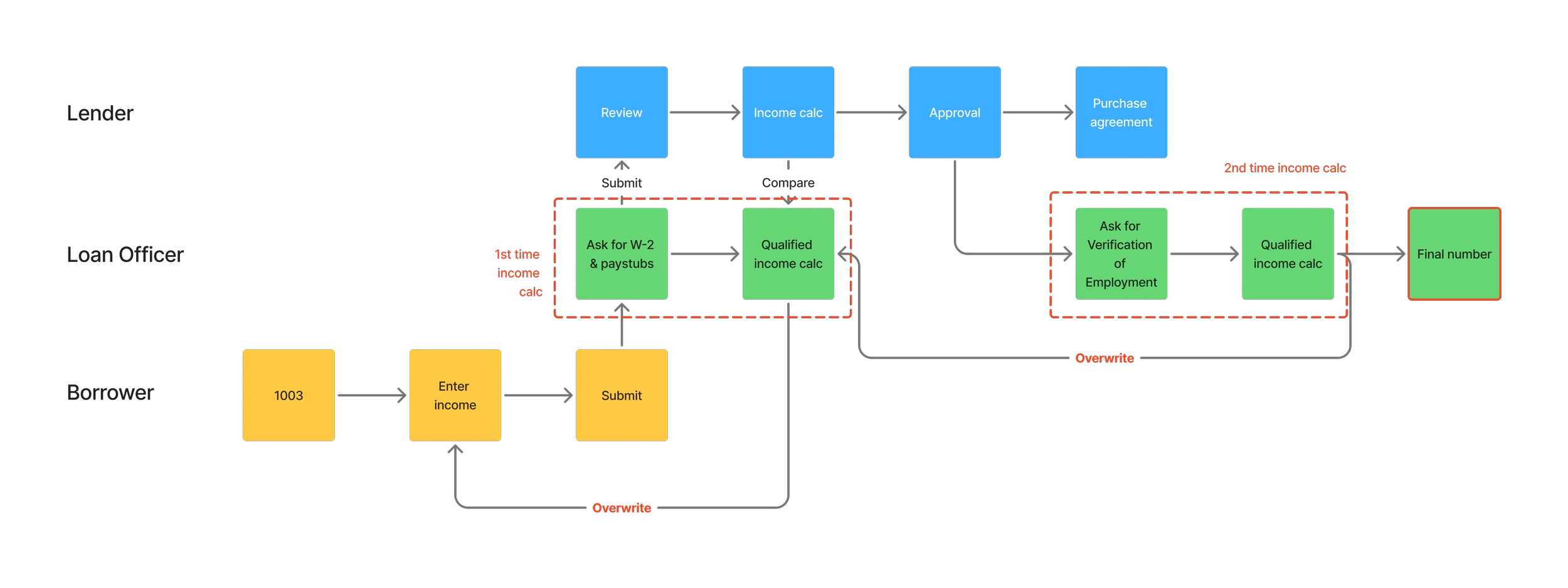
My PM insisted VOE should be first. I argued for W-2 and paystub, respecting real workflows. Neither of us convinced the other—until a consultant explained the process happens twice: early approximations with W-2s, final confirmation with VOE. That clarity made us both pause. It wasn’t about being right; it was about designing for the whole journey.

Beta Tests Proved What I Missed on Paper
Iteration · Empty state design · Responsive design · Micro-interaction design
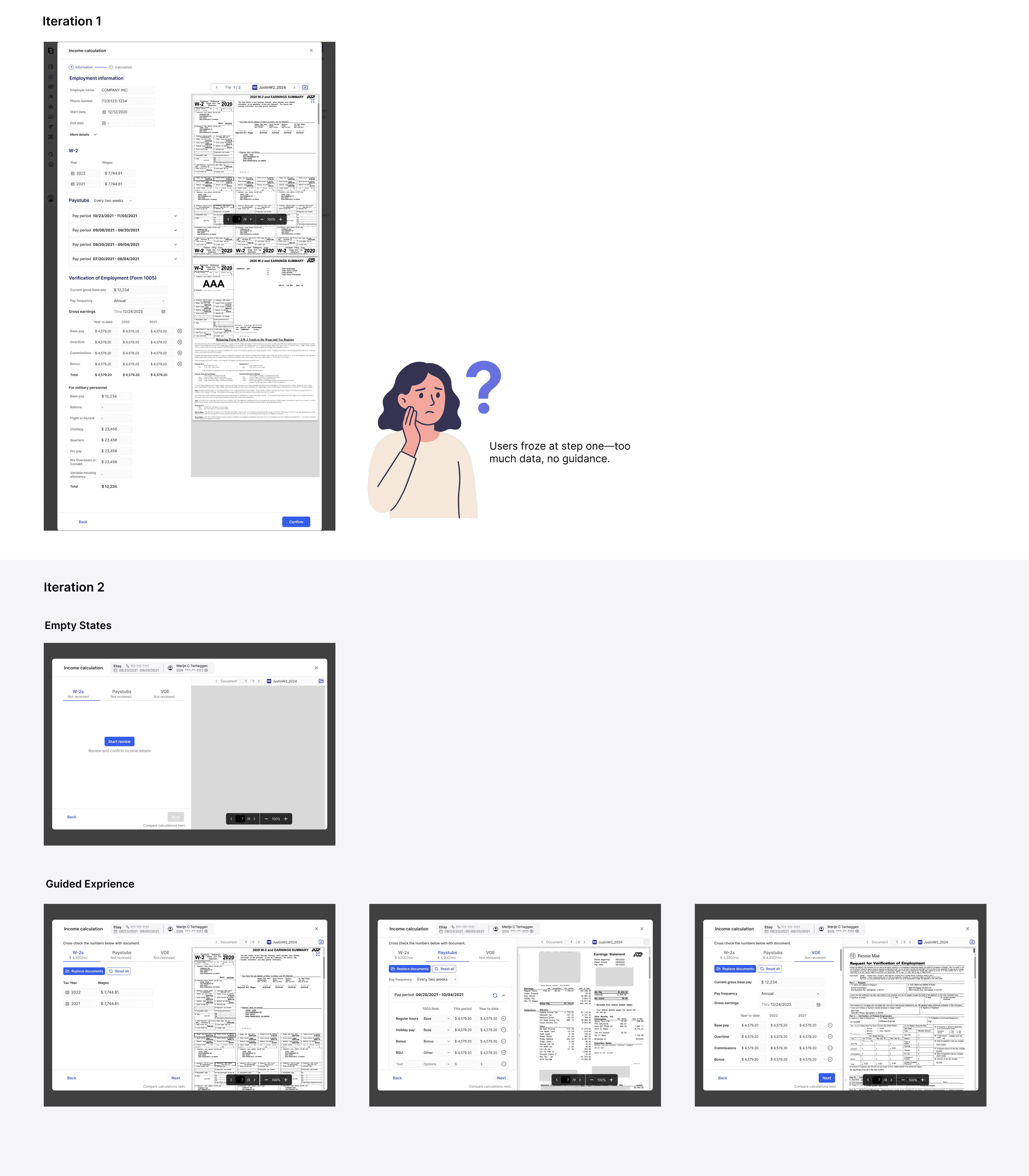
Watching real users in recordings was sobering. Some froze on the first page—too much data, no cues where to begin. My sketches hadn’t anticipated that overwhelm. I realized empty states, step-by-step structuring, and box-to-box highlights weren’t “polish.” They were survival tools for clarity. That shift reshaped my entire definition of detail.
The Perfect Match I Imagined, the Practical Fix We Shipped
Dev trade-off negotiation · Feasibility assessment · Redlines & annotations · QA support
Engineers told me true box-to-box highlights weren’t feasible in time. Instead of pushing, I reframed: what if we map file-to-box, not box-to-box? It wasn’t perfect, but it preserved clarity under the constraint. That moment taught me pragmatism isn’t surrender—it’s knowing which detail carries the most weight for users.