Compromises That Looked Like Defeats, Until They Became the Wins
This moment taught me design maturity. My instinct was to defend the precise, “correct” version of the search. But in listening to the PM, I realized the braver act was compromise. Not blind surrender, but judgment—knowing when to bend so the product could meet users where they were. That choice reminded me: design is not about personal pride in details, but about clarity delivered at the right time. It’s a lesson I carry forward into every debate.
A Consumer World I’d Never Entered, Yet Suddenly Had to Lead
When an Unfamiliar Market Became My Assignment
Stakeholder interview · Business requirements gathering · Dealing with ambiguity
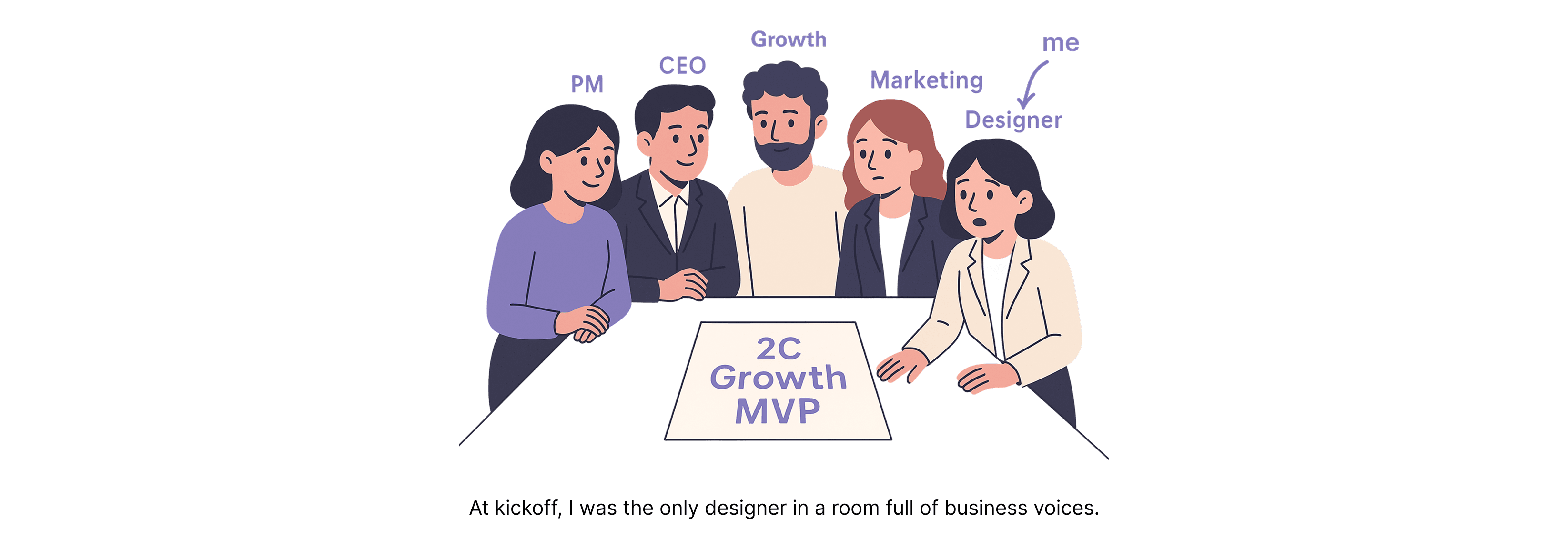
I had never formally designed a 2C or growth product, so the kickoff felt both exciting and intimidating. The challenge was amplified: no copywriter, a solo design role, and a mandate to move quickly. I realized this was not just about delivering screens—it was about stepping into ambiguity with confidence. Accepting that weight early helped me see the project not as a burden, but as a chance to prove adaptability in a space I had never touched before.
Competitors Drew Lines, but Our Path Was Different
Competitive analysis · Persona / Journey map / JTBD · Problem framing (diverge→converge)
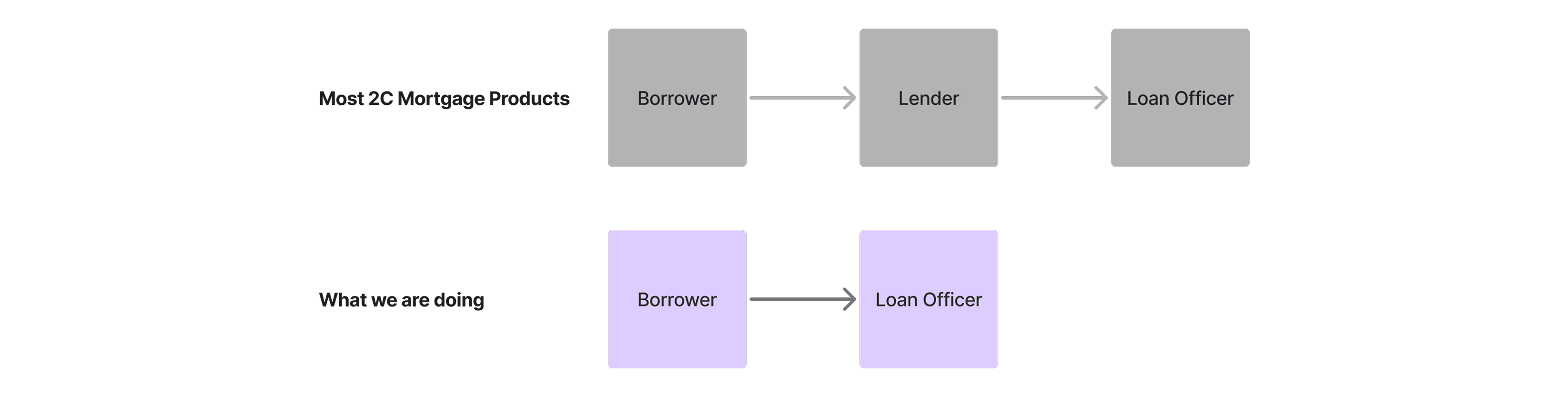
Looking at the mortgage market, most products stopped at lenders. But I kept asking: why couldn’t borrowers meet loan officers directly? With the PM, I reframed the positioning—skipping the lender entirely. It felt like a small rebellion against convention. I learned that differentiation was not just about features; it was about language, visuals, and trust. That realization shifted my mindset: we weren’t just building another mortgage tool—we were reimagining who got to sit at the table.
Their Struggle Wasn’t Getting Clients—It Was Being Seen
User interview · Insight synthesis / Data analysis · Empathy mapping
In interviews, loan officers confessed something simple but painful: they didn’t lack skills, they lacked visibility. Referrals and local ads only stretched so far in a cold market. Hearing this reframed the challenge for me—I wasn’t designing a shiny platform; I was giving people a stage they had never had. That realization anchored my empathy: the product’s value wasn’t abstract metrics, it was the possibility for one person to finally be noticed.

Every Compromise Looked Like a Loss, Until the Numbers Proved Otherwise
Precision Felt Right, Until Simplicity Won the Argument
Wireframe creation · Dev trade-off negotiation · Cross-functional collaboration
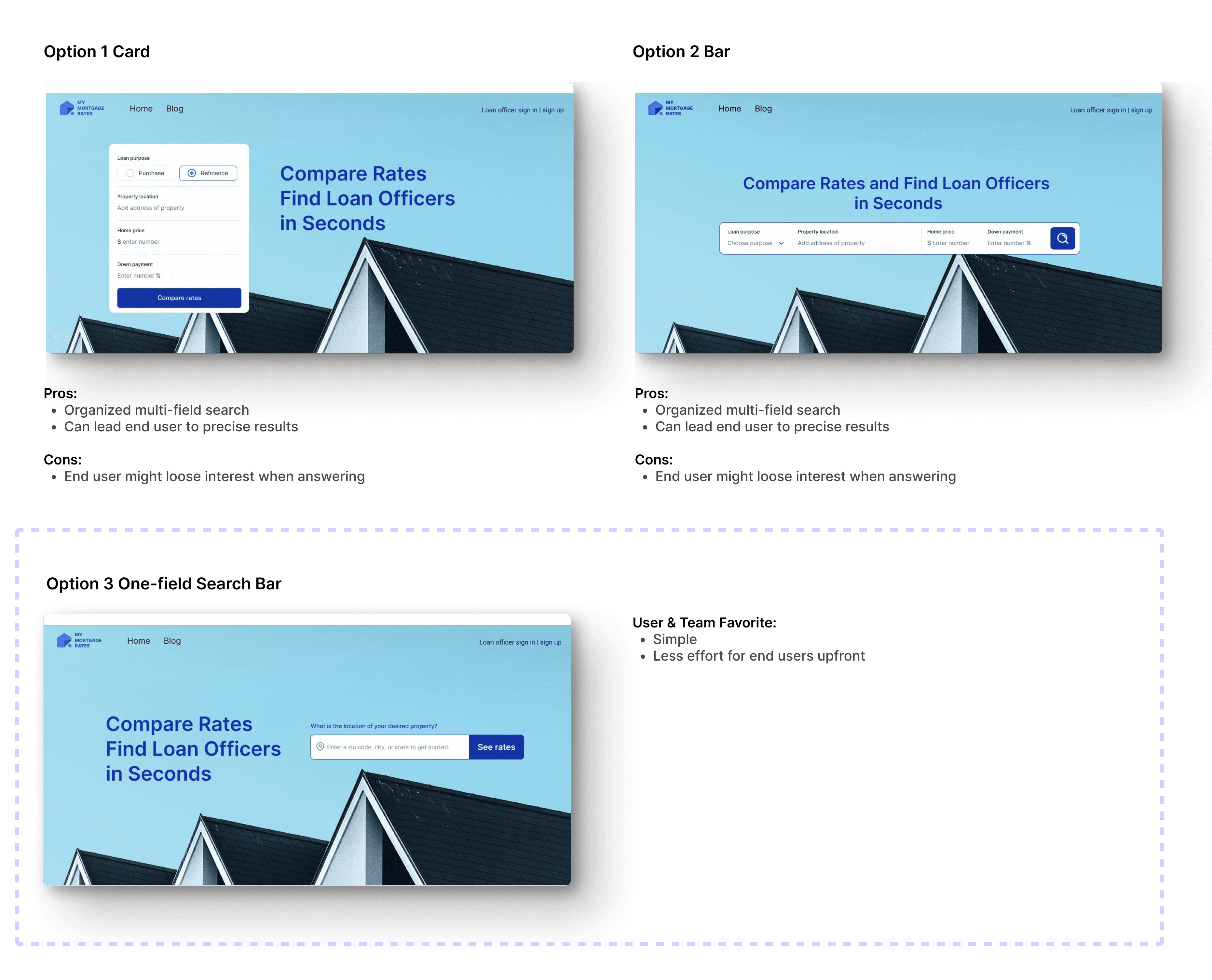
I designed a detailed search bar with three inputs, convinced precision would inspire trust. But the PM argued for speed—when traffic is low, clarity of value matters more than exact results. At first, I resisted; then I realized she was right. The pivot taught me maturity: design isn’t always about the “smartest” solution, but the one that meets the moment. I changed the design, carrying forward the lesson that compromise can sharpen clarity.
Too Many Words, but Not Enough Consensus
Iteration · Presentation & storytelling · Conflict resolution
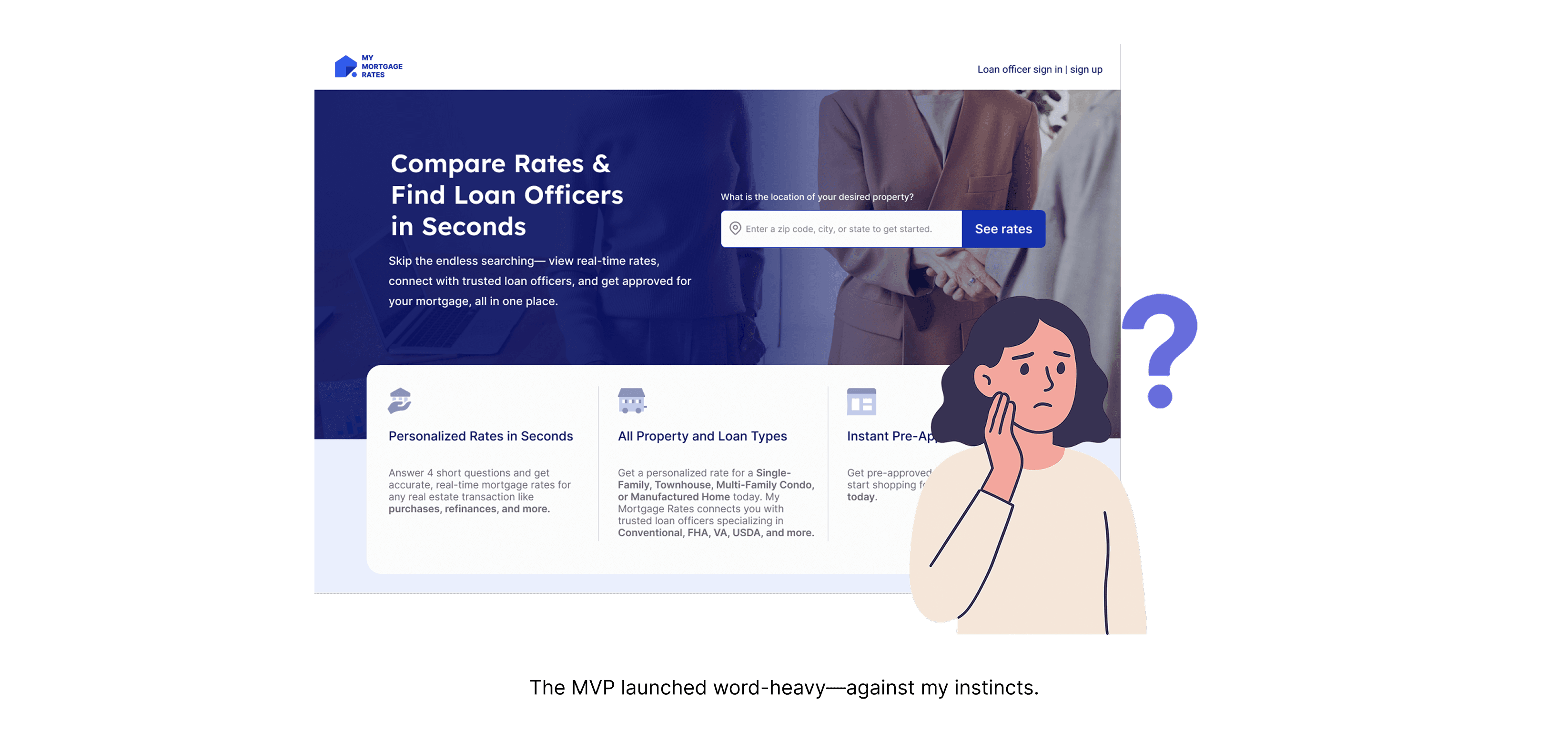
As the homepage filled with content, I worried about cognitive overload. Yet marketing and leadership pushed for more words—more promises, more features. I argued, but the team reminded me: this was MVP, not perfection. In the end, I chose to yield, letting the version launch with text-heavy screens. The moment taught me restraint: sometimes, the fight worth saving is not for fewer words today, but for a stronger argument tomorrow.
Old Grids Broke, Forcing a New System to Emerge
Design system / Style guide / UI kit · Responsive design · Dev collaboration
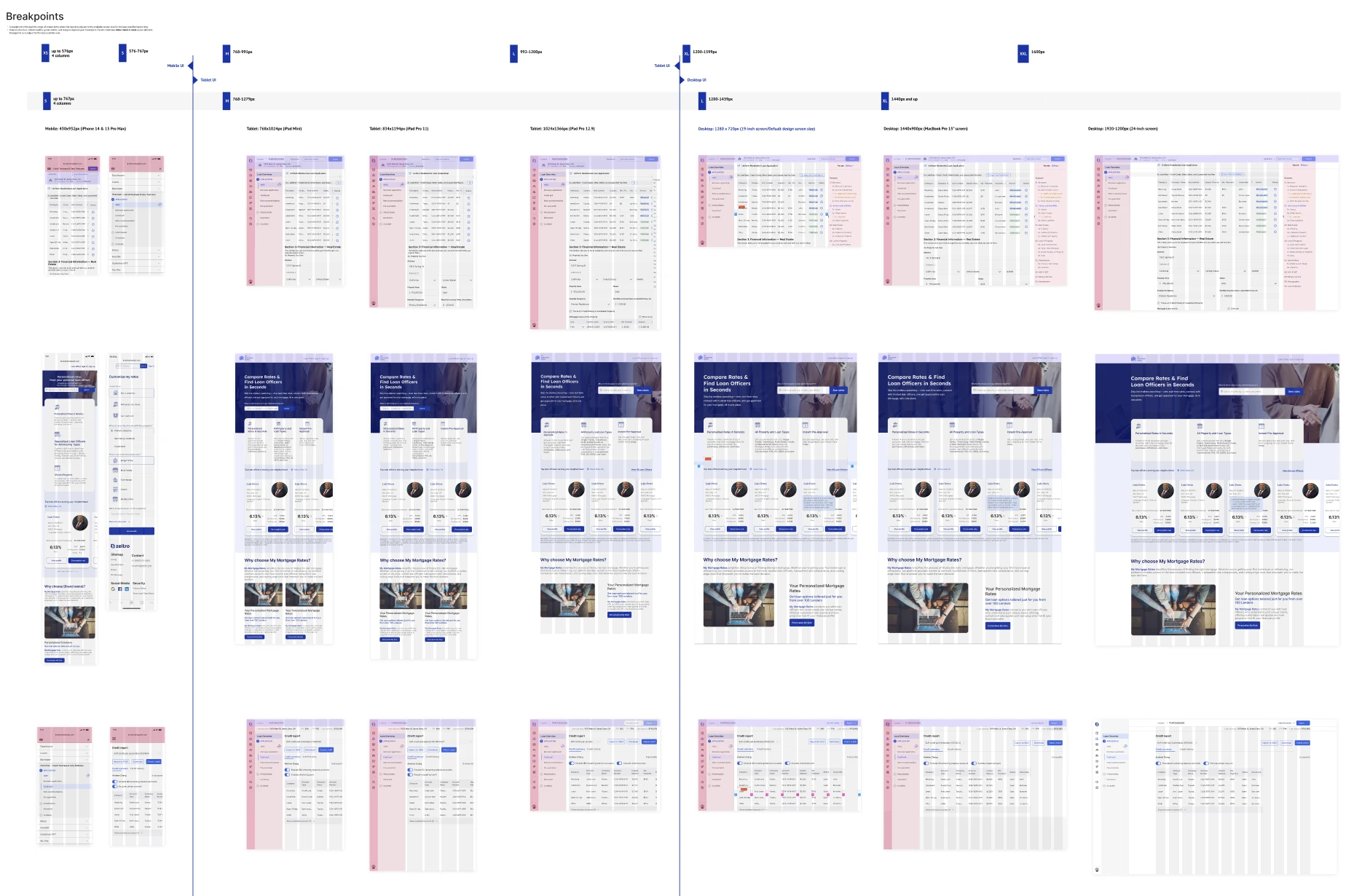
Our 2B platform grid system didn’t fit the consumer site. Columns broke, responsiveness failed. Rather than patching, I rewrote the responsive guidelines and integrated them into the design system. It felt tedious, but I learned the value of invisible labor—the kind users never notice but rely on every second. That diligence is what lets designs scale, and I left knowing the work beneath the surface often defines long-term success.
The MVP Looked Rough, but the Numbers Spoke Louder
UI Handoff · Dev Collaboration
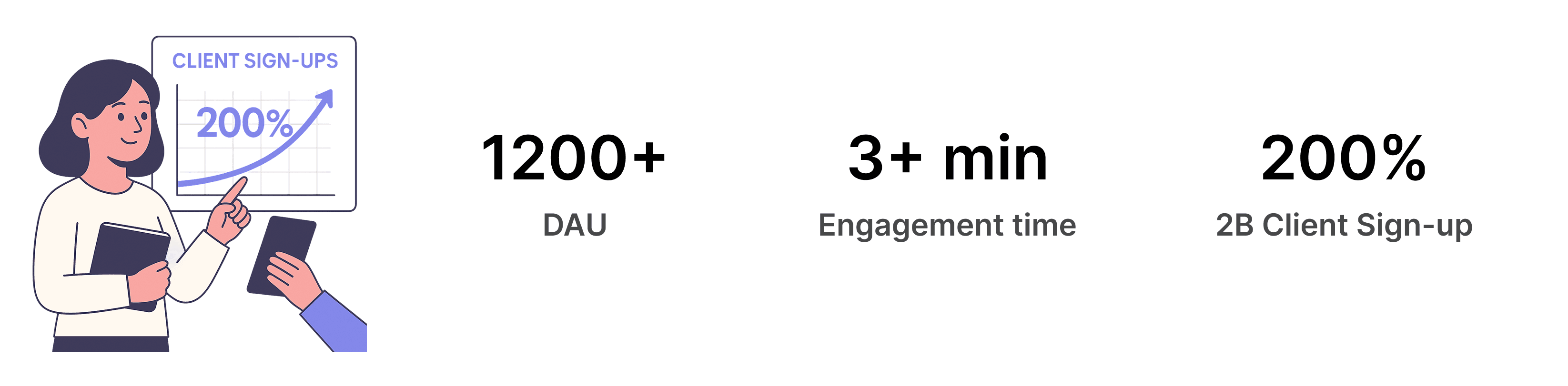
Despite my doubts about heavy text and professional colors, the launch was a surprise success. Client sign-ups doubled year-over-year, and daily active users passed 1,200, with three-minute average engagement. The metrics humbled me: polish matters, but traction matters more. I learned that early wins don’t come from elegance—they come from testing, measuring, and adapting fast. Numbers gave me the clarity words could not.